
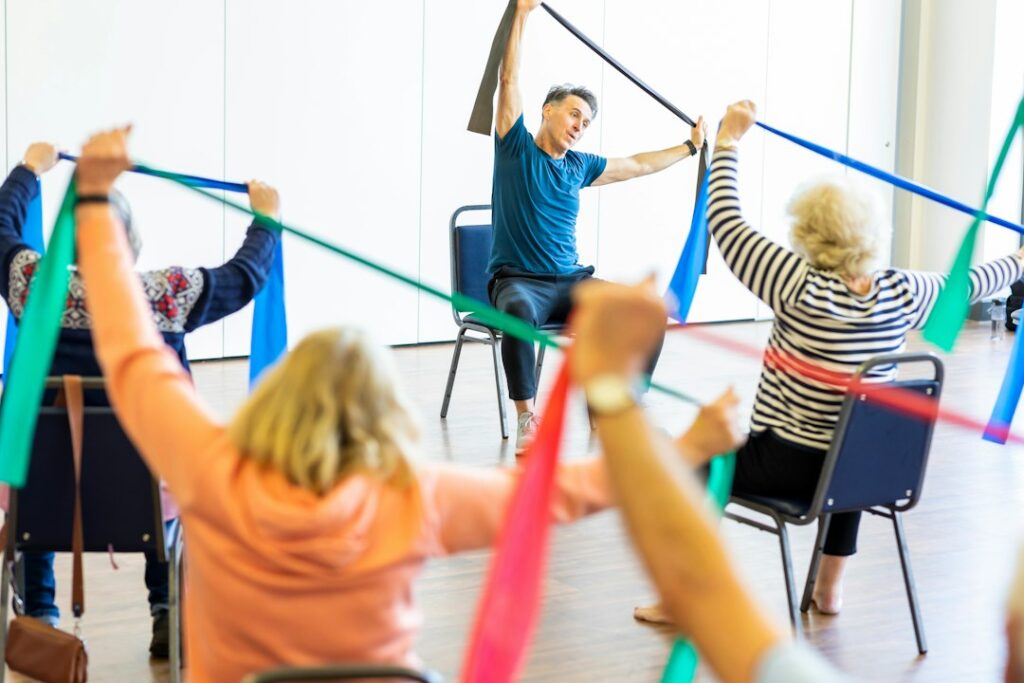
Healthy aging in assisted living is not about following a perfect routine. It is about preserving strength, safety, independence, connection, and enjoyment through manageable daily habits. Residents can often improve well-being by staying active, eating enough nutritious food, protecting sleep, preventing falls, and speaking up when health needs change.
How can assisted living residents stay physically active?
Regular movement supports muscle strength, balance, circulation, mood, sleep, and independence. Activity does not have to mean strenuous exercise or a long workout.
A practical routine may include:
- Walking indoors or outdoors, as conditions allow
- Repeatedly standing up and sitting down from a sturdy chair
- Gentle stretching after waking or before an activity
- Light resistance exercises using bands or small hand weights
- Balance exercises performed near a secure support
- Gardening, dancing, housekeeping tasks, or recreational games
For many adults age 65 and older, general guidance includes aerobic activity, muscle-strengthening activity on at least two days each week, and regular balance exercises. However, residents with heart, lung, joint, neurological, or balance concerns should follow an activity plan suited to their abilities.
Short sessions count. Five or ten minutes of movement several times during the day may be more realistic than completing one long exercise period. The goal is consistent participation without pain, dizziness, unusual shortness of breath, or exhaustion.
What should residents know about preventing falls?
Falls are not an unavoidable part of aging. Medication effects, poor lighting, vision changes, unsafe footwear, weakness, dehydration, and sudden drops in blood pressure can all increase risk.
Residents should report:
- A recent fall or near-fall
- New dizziness or unsteadiness
- Trouble getting out of a chair
- Changes in vision
- Feeling unusually sleepy after taking medicine
- Fear of walking or using the bathroom alone
Keep frequently used items within easy reach, avoid walking in socks on smooth floors, and use prescribed glasses and mobility equipment correctly. Good lighting matters, especially between the bedroom and bathroom. During snowy or icy weather in West Reading, outdoor walking may need to shift indoors until paths are clear and adequately treated.
A medication review can be useful if dizziness, confusion, weakness, or sleepiness develops. Prescription medicines, over-the-counter products, and supplements can all affect balance.
How can nutrition and hydration support healthy aging?
Older adults need nutrient-dense food even when appetite decreases. Adequate protein helps maintain muscle, while calcium and vitamin D support bone health. Fruits, vegetables, whole grains, beans, lean meats, fish, eggs, and other protein-rich foods can contribute to a balanced eating pattern.
Residents may benefit from:
- Including a protein source at meals and snacks
- Choosing colorful fruits and vegetables
- Drinking fluids regularly instead of waiting until thirsty
- Discussing swallowing, chewing, or dental problems promptly
- Telling dining staff about food allergies, dislikes, or cultural preferences
- Watching for unplanned weight loss, loose clothing, or reduced appetite
Some health conditions require limits on sodium, fluids, potassium, sugar, or other nutrients. Dietary changes should be discussed with the resident’s healthcare team rather than copied from a general diet plan.
Dehydration can contribute to constipation, weakness, dizziness, confusion, and urinary problems. In warmer weather, residents may need reminders to drink. During winter, indoor heat can also contribute to dry mouth and fluid loss even when the weather feels cold.
What can improve sleep?
Most older adults need roughly seven to nine hours of sleep, although individual needs vary. A steady daily schedule can help the body recognize when it is time to rest.
Helpful habits include:
- Waking and going to bed at similar times
- Limiting late-afternoon or evening naps
- Getting daylight exposure earlier in the day
- Staying physically active at appropriate times
- Keeping the bedroom quiet and comfortably cool
- Avoiding large meals, caffeine, or alcohol close to bedtime
- Discussing persistent snoring, nighttime pain, frequent urination, or insomnia

Poor sleep should not automatically be dismissed as normal aging. It can sometimes signal depression, medication side effects, sleep apnea, pain, restless legs, or another treatable issue.
Why do social connection and meaningful activities matter?
Social connection supports emotional health and can encourage residents to move, eat regularly, and maintain daily routines. Assisted living residents may still feel lonely, particularly after a move, loss of a spouse, illness, hearing changes, or reduced mobility.
Meaningful participation might include:
- Joining a small group rather than a crowded activity
- Calling family or friends on a predictable schedule
- Writing letters, listening to music, or working on crafts
- Sharing recipes, stories, or life experiences
- Participating in faith, educational, or discussion activities
- Helping with a manageable community task
Residents do not need to attend every event. One familiar activity or regular conversation may be more comfortable and sustainable than a full calendar.
Persistent sadness, loss of interest, hopelessness, major appetite changes, or withdrawal deserve attention. Emotional distress is a health concern, not a personal failure.
How can residents protect brain health?
Brain health is supported by many of the same habits that protect the body: physical activity, nutritious food, good sleep, social contact, hearing and vision care, and management of conditions such as high blood pressure or diabetes.
Residents can keep the mind engaged by learning a new skill, reading, playing games, discussing current events, organizing photographs, or practicing music. Mental activities should be enjoyable rather than treated as a test.
Hearing loss is sometimes mistaken for confusion. Vision problems can also make activities and conversations harder. Updated hearing devices, glasses, and adequate lighting may improve communication and participation.
A sudden change in alertness, behavior, speech, strength, or memory requires prompt medical attention. Sudden confusion is not simply normal aging.
Which health appointments and preventive steps should not be overlooked?
Routine healthcare helps identify problems before they interfere with independence. Residents should keep track of recommended checkups, vaccinations, vision care, dental care, hearing evaluations, bone health discussions, and chronic-condition monitoring.
Bring an updated list of:
- Prescription medicines
- Over-the-counter medicines
- Vitamins and supplements
- Allergies
- Recent falls
- New symptoms
- Questions about appetite, sleep, mood, or memory
Residents should also know how to report changes to assisted living staff and family members. Speaking up early can help prevent a minor concern from becoming an emergency.
Healthy aging is a continuing process. The most useful routine is one that fits the resident’s abilities, preferences, medical needs, and daily environment while leaving room for pleasure, rest, friendship, and personal choice.
