
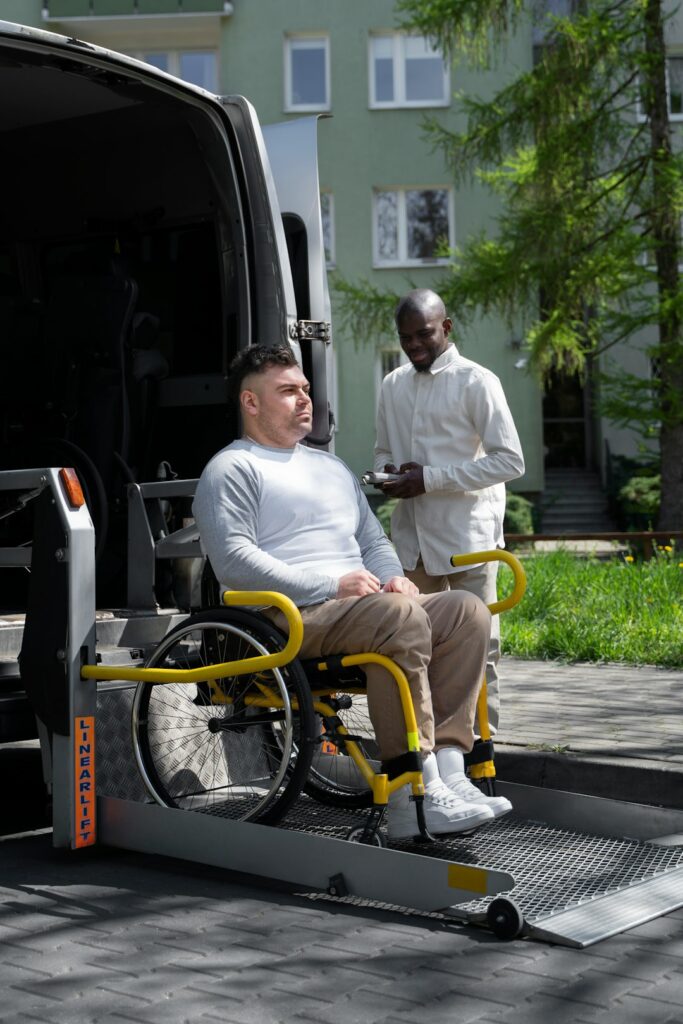
Assisted living transportation helps residents attend medical appointments, visit family, participate in activities, shop for essentials, and remain connected to the community. In West Reading, PA, transportation planning can be especially useful because residents may need to manage changing mobility needs, winter weather, busy appointment schedules, and trips that require more support than ordinary public transportation can provide.
What transportation services are available in assisted living?
Most assisted living residences provide or arrange transportation on a regular schedule. Services commonly include rides to medical and dental appointments, pharmacies, rehabilitation visits, religious activities, shopping trips, social outings, and community events.
Transportation may be provided in several ways:
- A residence-owned vehicle driven by trained staff
- A wheelchair-accessible van
- A contracted transportation service
- Public or shared-ride transportation
- Family transportation arranged around the resident’s care plan
The available options depend on the residence, the resident’s mobility, the destination, and whether the trip is medical or social. Some transportation is included in the monthly cost, while other trips may involve an additional fee. The written agreement should explain what is included and how additional transportation is handled.
A transportation schedule may operate weekly rather than on demand. This means residents often need to reserve a ride several days in advance, particularly for appointments outside the regular local service area.
Does assisted living have to provide transportation?
Pennsylvania assisted living regulations require a residence to provide or arrange transportation on a regular weekly basis so residents can schedule medical and social appointments within a reasonable local area.
This does not necessarily mean that every resident can request a vehicle at any time or travel to any destination. A residence may define its regular schedule, service area, reservation process, and any additional charges in the resident agreement.
The phrase “reasonable local area” can vary based on the residence’s location and operating arrangements. Residents and families should ask for a clear explanation of how the residence interprets that term before assuming that every doctor, hospital, shopping area, or family destination is covered.
Transportation availability also does not replace emergency medical services. A medical emergency requires emergency assistance rather than a scheduled assisted living ride.
How far in advance should a ride be scheduled?
Residents should schedule transportation as soon as an appointment is made. Earlier notice is particularly helpful for wheelchair-accessible vehicles, multiple appointments, early-morning visits, and trips requiring an escort.
Before confirming a medical appointment, ask:
- Is the destination within the regular transportation area?
- What days and times are transportation available?
- How much time is needed for boarding and unloading?
- Can a walker, wheelchair, oxygen equipment, or other device be transported?
- Will a staff member accompany the resident?
- What happens if the appointment runs late?
- Is a family member permitted to ride along?
Pennsylvania rules generally expect reasonable efforts to keep scheduled pickups close to the agreed time. For residence-provided or arranged transportation, residents should not ordinarily be dropped off more than one hour before an appointment, and pickup after a medical appointment is generally expected within one hour.
These timeframes are not a guarantee that every trip will be exact. Traffic, weather, appointment delays, vehicle problems, and changes in a resident’s condition can affect the schedule. Still, repeated long waits should be documented and discussed with the residence.
What does wheelchair-accessible transportation involve?
A vehicle that can transport a wheelchair is not automatically suitable for every wheelchair user. The vehicle must have enough space for the chair, the resident, and any required mobility equipment. The boarding process also matters.
Ask whether the resident will:
- Remain seated in the wheelchair during travel
- Transfer into a regular vehicle seat
- Use a ramp or lift
- Need assistance with brakes, footrests, or seat belts
- Require a larger mobility device or specialized seating
- Travel with an oxygen tank or other medical equipment
If a residence supplies its own transportation for medical and social appointments, Pennsylvania requirements call for at least one vehicle to be accessible to wheelchair users and the assistive equipment they may need.
A resident should never be expected to use a vehicle that cannot safely accommodate the person’s mobility device. Changes in strength, balance, or endurance may also require a new transportation assessment even if the resident previously traveled without assistance.
Who may drive or accompany a resident?
When staff members or volunteers provide transportation, Pennsylvania requirements include basic safety protections. Vehicle occupants must use appropriate restraints while the vehicle is moving. The driver must be at least 18 years old and hold a valid driver’s license, and a resident may not drive the residence vehicle.
At least one staff member transporting or accompanying residents must have completed required direct-care training. Vehicles used by the residence must also carry a first-aid kit, and drivers may use only hands-free cellular telephone functions while operating the vehicle.
These rules address transportation safety, but families should also ask about practical support. A driver may be able to transport a resident but may not be authorized to provide hands-on assistance with toileting, transfers, medication, or navigating a medical building. Those needs should be identified before the trip.

What happens during winter or severe weather?
Seasonal conditions can affect transportation in West Reading. Snow, ice, freezing temperatures, and reduced daylight may make loading, unloading, and walking from a vehicle to a building more difficult. Even a short path can become unsafe for someone using a cane, walker, or wheelchair.
Residents and families should ask how transportation decisions are made during poor weather. Important questions include:
- How are cancellations communicated?
- Are nonessential trips rescheduled?
- Will medical appointments receive priority?
- Is there a backup plan for time-sensitive treatments?
- Who checks whether sidewalks, ramps, and vehicle areas are safe?
- Can the resident wait indoors rather than outside?
A delayed ride may be inconvenient, but traveling on untreated ice or during dangerous conditions may create a greater risk. Transportation plans should account for both the appointment and the resident’s safety at the pickup and destination points.
Can family members arrange transportation?
Families may provide transportation when the resident, family member, and residence agree that the arrangement is safe and practical. The residence may need information about pickup times, destinations, return plans, mobility equipment, and who is responsible for the resident while away.
Family transportation can be useful for evening visits, special events, longer trips, or appointments outside the routine schedule. It should not be assumed that family members can independently remove a resident from the residence without following sign-out or care-plan procedures.
If a resident needs help transferring, walking, remembering instructions, or managing medical equipment, the family member should understand those needs before agreeing to drive.
What should residents review before choosing an assisted living residence?
Transportation should be evaluated as part of the overall care plan rather than treated as a minor convenience. During a visit or care discussion, ask to see the transportation policy in writing.
Useful questions include:
- How often are scheduled rides offered?
- What destinations are included?
- Are medical and social trips treated differently?
- Is transportation included in the monthly rate?
- Are there trip limits or mileage limits?
- How are wheelchair users accommodated?
- Can a companion ride with the resident?
- What happens when an appointment is delayed?
- Is transportation available during evenings or weekends?
- How are weather-related changes handled?
For many residents, reliable transportation supports more than appointments. It helps preserve independence, maintain family relationships, continue familiar routines, and reduce the isolation that can follow a loss of driving ability. A clear transportation policy allows residents and families to plan realistically and identify gaps before they become urgent.
